People have a way of defining themselves in relation to the music they consume. Decades ago, the boundaries between genres were solidified, acting almost as sovereign borders. Punks, Rappers, and Country singers all dressed in a specific, typified way that embodied and enacted a distinct lifestyle. This was the era of musical identity politics—a reflection of the broader 80s and 90s obsession with "the cause."
Groups unified under specific banners—Feminist, LGBT, racial, or subcultural—focusing on individual identity while often ignoring larger collective visions. By refusing to factor in the systemic engines behind their struggles, these groups were often barred from the kind of structural change that would alleviate their problems. The victory was seen as carving out a niche; rather than seeking a revolution, many settled for the satisfaction of helping a single life within a single lifestyle group. With the bar for political change set so low, these organizations often failed to develop the muscle memory needed for true collective action.
The Rise of the "Alternative" to Nothing
After the death of Punk—and the decline of musical identity politics in general—arose "Alternative" music. But we must ask: Alternative to what? Initially, it was a rebellion against the mainline, but when the alternative became the mainline, it became an alternative to nothing.
More importantly, alternative music provided a framework for bands to integrate multiple identities, lifestyles, and musical groundings. It was a way to tap into as many subgroups as possible, weaving disparate life narratives into a single profitable thread. We saw punks cut their hair—a scene reminiscent of the final moments of the film SLC Punk—joining the status quo while maintaining the delusion that they were doing something radical by simply being "alternative." In reality, the music didn’t sell out; the fans bought in.
One of the vanguard bands of this transition was Limp Bizkit—a group that, for better or worse, signaled the end of genre purity. This leads me to a recent encounter that brought this history back into a sharp, visceral focus.
The Parking Lot Ghost
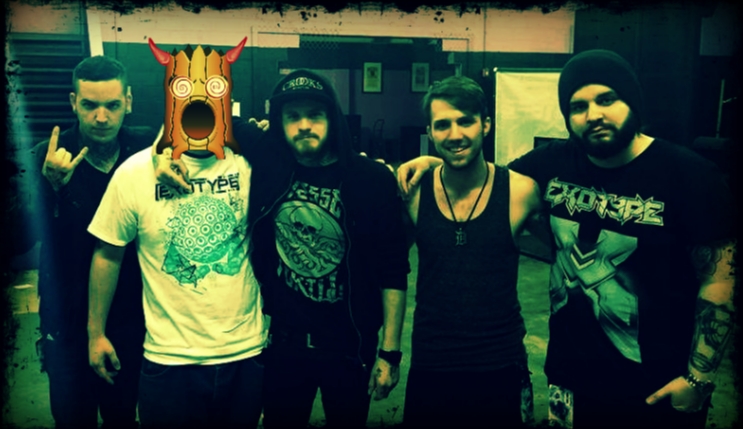
Yesterday, I took a break from a book to check my Facebook feed. I caught a post from a long-lost Navy buddy, Steve McCorry, who had posted a photo of the Chicago cityscape. It turned out his band, Exotype, was playing a tour stop only fifteen minutes away.
Ready for a midweek adventure, I headed to the show. Upon arrival, I decided to sit in my car for a few minutes to charge my dying phone. That was when they arrived: a carload of white, middle-class males wearing bandanas, singing along to the over-loud and obnoxious tunes of Limp Bizkit. They parked right next to me. Having not heard a Limp Bizkit song in five years, I felt a "soggy" sensation in my gut—a sudden invasion of a musical age I thought was buried, dead, and rotting.
I sent a text to Steve:
“The car next to me just pulled up blasting Limp Bizkit. AND they are singing to it! Is this what your fans smell like?”
“Oh dear, they started a second song. They are intentionally listening to it!”
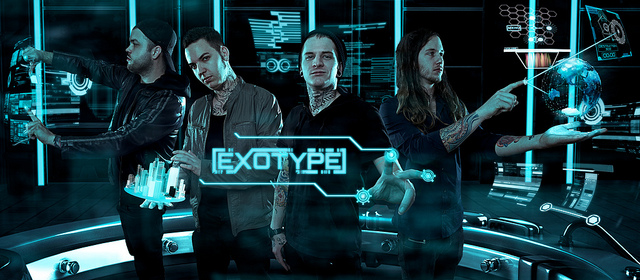
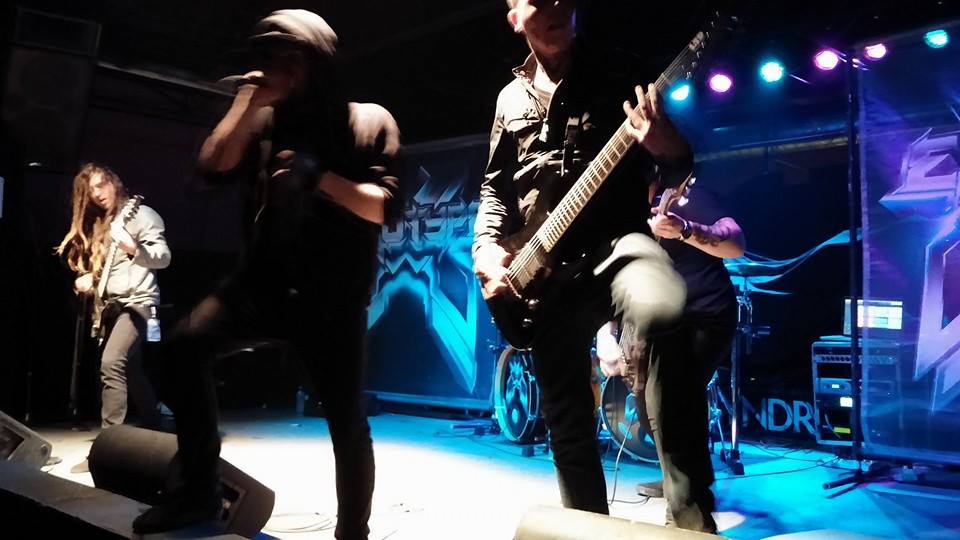
Steve waved at me from the parking lot, and I joined the band in their tour van. When I knew Steve in the Navy nearly a decade ago, he was a prideful guitarist who would pull out his instrument to impress girls in Virginia Beach. Now, he was the lead singer of a group I would describe as "Post-Alternative," though they self-identify with more ominous labels: Metalcore, Deathcore, and Dubcore.
The Dialectics of the Pit
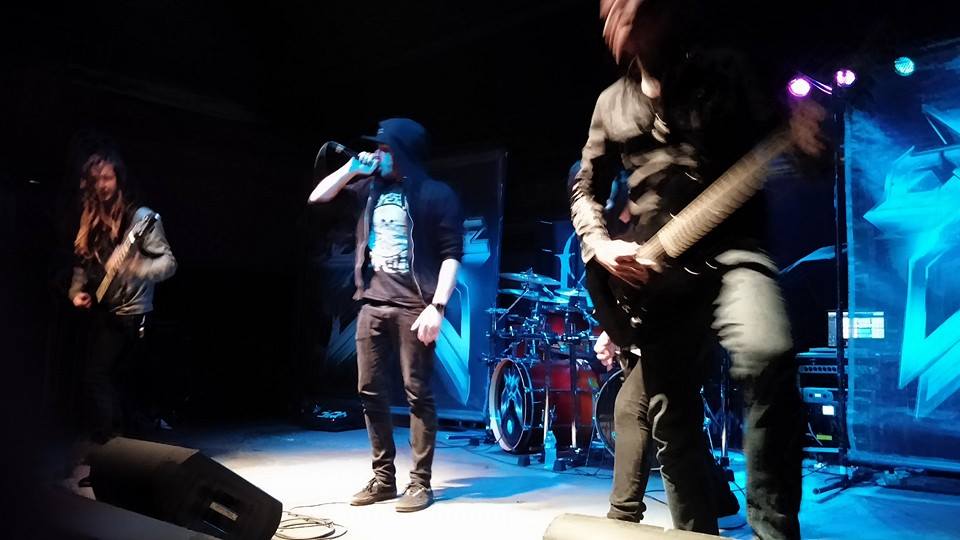
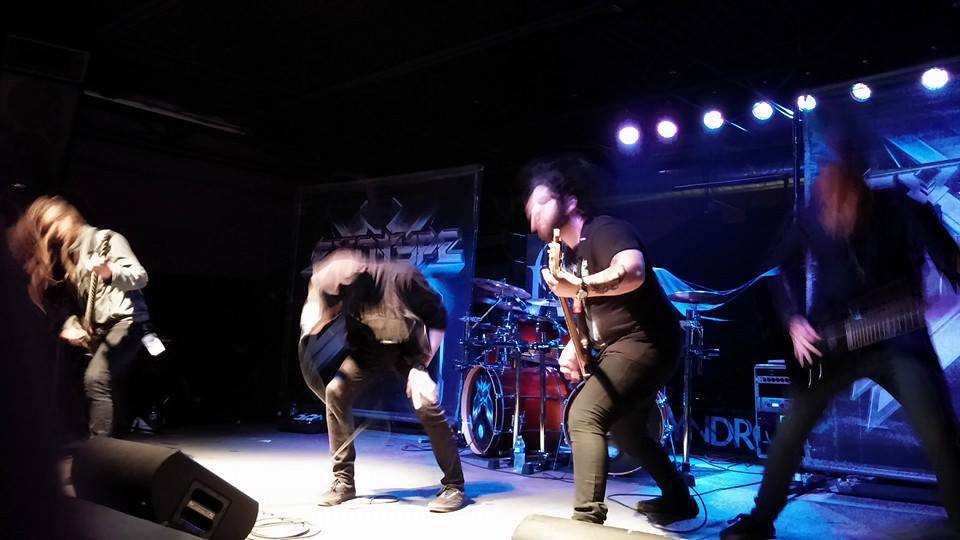
During Exotype’s performance at "Another Hole In The Wall," I witnessed the primary binary of the concert: the dialectical interplay between the performer and the fan. The stage, an altar-like structure at chest height, allowed the performers to tower over the audience. This physical elevation produces a relational kinesthetic; the audience member is literally "called into being" by the band’s musical force.
Before the crowd arrives, they are an undigested mass of variables. The music transforms them from isolated nodes into a collectivized system. They police their own fandom, setting unspoken rules for shared space—much like drivers on a highway who unconsciously adjust their speed to match the flow of traffic.
However, a conflict over "the commons" soon emerged. Between songs, Steve shouted, “I want to see you move,” twirling his finger clockwise. A circle pit formed, led by the Limp Bizkit-ites I had encountered in the parking lot. Nearby, two women became dismayed, expressing desperate worry that they would be flung into the sweaty violence.
The Post-Alternative Tension
What happens when the temperament of the "commons" shifts? In a movie theater, if one person talks, you can target the causality: "Hey jerkface, shut your hole." But if the entire theater is talking, silence becomes the radical, powerless minority.
At the Exotype show, the audience was split. Half wanted to bounce their bodies against each other in a display of "sweaty violence," while the other half pursued relative peace. This is the hallmark of post-alternative ideology. It is a music that pulls together disconcordant elements—dub-steppers, metalheads, teens, geezers, and single mothers—and melts them together in a way where each element exists in a state of permanent tension with the others.
The "lifestyle" is no longer a solidified block; it is a collision. In the pit, we see the remnants of 90s aggression meeting the digital-age "dubstep" vibe, creating a space where everyone is welcome, but no one is necessarily comfortable.
To learn more about Exotype, follow them on social media:
Facebook: Exotype
Twitter: @EXOTYPEmusic
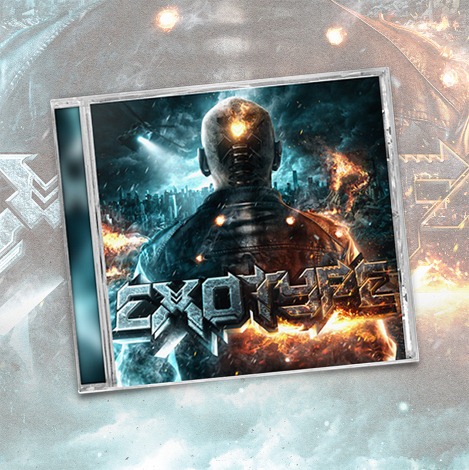
New Album: MerchNow
Comments
Post a Comment