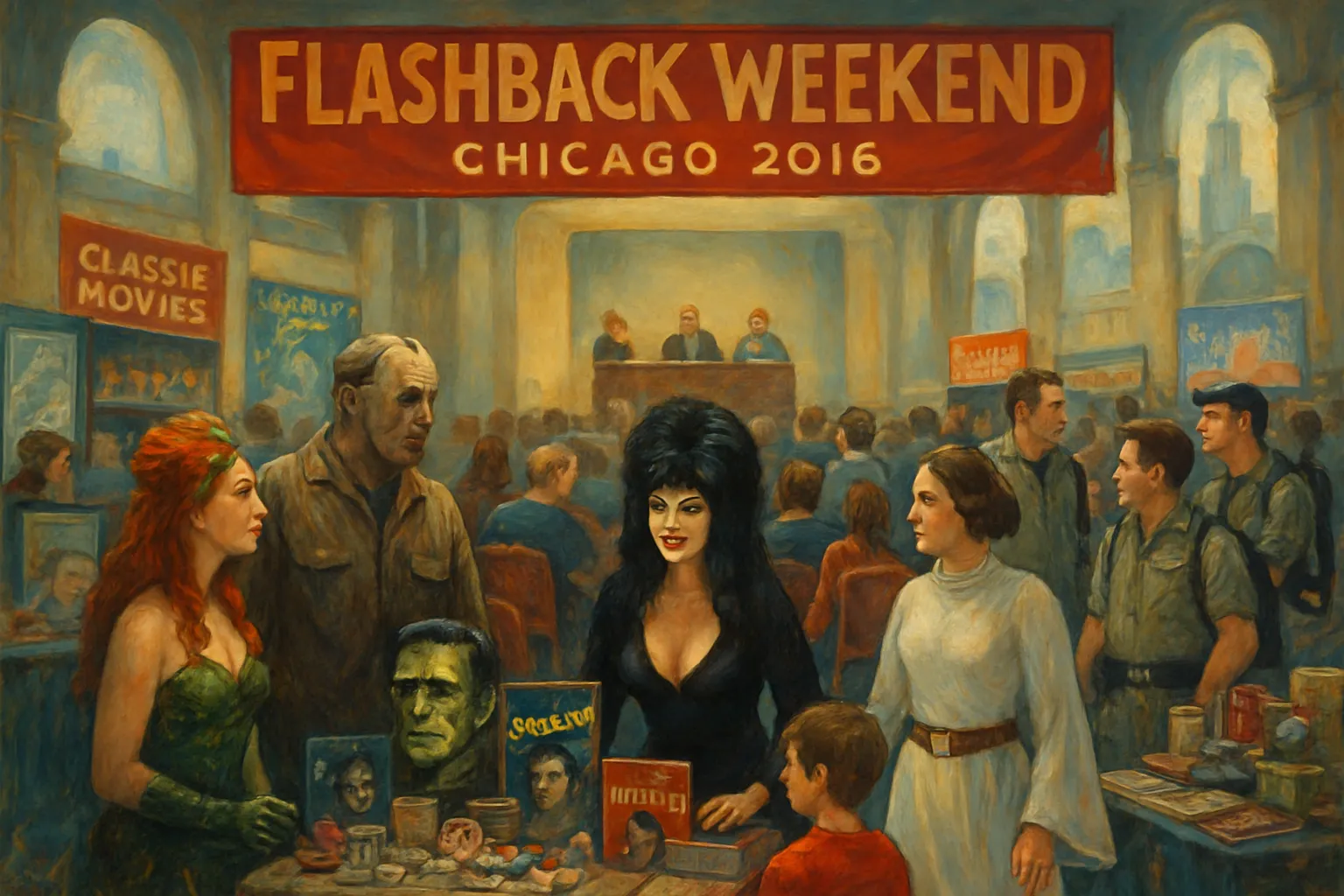
Since moving to Chicago, I have been hesitant to attend Flashback Weekend. As a long-running staple of the horror community, it carries a certain prestige, but as a veteran living with PTSD, the prospect of entering a crowded hotel ballroom full of strangers is less "spooky fun" and more of a tactical nightmare.
I arrived at the Crowne Plaza Chicago O'Hare with a conflicting internal monologue: a twinge of fan-driven giddiness fighting against a deep-seated hatred of crowded spaces. My mind immediately began a defensive "castration" of the crowd, mentally dismissing the "posers" and the incumbent parents dragging toddlers through aisles of gore.
Day 1: The Flea Market of the Macabre
Registration opened at 1:00 PM, and I surrendered to my first line. After receiving my wristbands, I found myself in the liminal space between the lobby and the vendor room. Peeking through the glass, I saw the skeleton of the event: film companies lining tables and vendors unboxing plastic nightmares.
The social landscape was a jarring mix of "dedication and pseudo-intellectualism." To my left, a New Yorker dropped buzzwords like "meta" and "post-modern" with practiced ease; to my right, two fellows stood in full tactical gear—trench coats, masks, and combat boots—clutching plastic weapons. I sat between them, laptop plugged into an outlet, realizing with a sink of my stomach that I’d left my phone charger in the car.
When the doors finally opened at 3:00 PM, I dodged the bottleneck and rushed to the back, zig-zagging my way to the front to avoid being trapped. My initial reaction was a mix of disgust at the prices and a begrudging respect for the "coolness" of the stock. Eventually, my organizer skills kicked in, and I began targeting specific tables of interest.
The Highlights of the Floor:
JH – Original Pen Drawings: I found myself drawn to a booth selling poster-sized art. Unlike the glossy, mass-produced prints elsewhere, these had a manic energy. They reminded me of the ballpoint pen scribbles I’d make in high school—heavy ink strokes and furious scrawling—but far more detailed. I walked away with two pieces (Jason and Cthulhu).
The Toddler Icons: I passed one table four times before stopping. The artist’s wife was perhaps the only person in the room who seemed to authentically enjoy human interaction. Her husband’s work reimagined horror icons as toddlers; even Pinhead was somehow adorable.
The Windy City Horror Association: This felt like a small cult of local writers. I was greeted by a "wise-ass, profanity-spewing author" who guaranteed my stomach would turn. The cover art for a book titled Cannibal Fat Camp—featuring a chubby toddler gnawing on a severed leg—was too captivating to pass up. I bought two books, which the author graciously autographed.
The Disfigured Barbies: One table featured "Horror Barbies"—disfigured, bleeding, and dressed in hand-sewn rags. It felt like an act of revealing the "rotten corpse" hidden beneath the plastic. However, the artist refused to be in any pictures, which struck me as odd. If you can't stand behind your work, why are you here?
By the end of Day 1, I felt a "rotting sense of disgust" for the vampiric consumerism of the event. Between $15 parking, $100 passes, and celebrity autographs ranging from $25 to $80, it felt less like a film festival and more like an inflated flea market.
Day 2: The Profit Principle vs. The Creative Drive
I woke up for Day 2 sweaty, exhausted, and in desperate need of coffee. The "Horror Business" has always been a gamble—laying very little on the line and betting on an epic return. But reflecting on the nature of the industry made me realize why I was pulled into horror in the first place: stories with "gut-wrenching heart and balls-to-the-wall authenticity."
Working the Room: Eugene Clark
One of the genuine highlights of the weekend was Eugene Clark. Best known as "Big Daddy" from Land of the Dead, he was a masterclass in stage presence. He knew exactly how to work a room, commanding the space with a charisma that made the commercial cynicism of the weekend fade for a moment. I had the chance to speak with him afterward, and he was just as engaging one-on-one. In a building full of people selling their time by the minute, Clark felt like a real person.
The Cringe: Malcolm McDowell and the Navy Officer
The peak of "convention awkwardness" occurred during the panel for Rob Zombie's 31. Malcolm McDowell was on stage to promote the new film, but the atmosphere turned sour thanks to a persistent Navy Officer in the audience.
For ten excruciating minutes, the officer fixated on the infamous assault scene from A Clockwork Orange. Despite the panel being for a completely different movie, he wouldn't let it go. McDowell, ever the professional but clearly losing patience, eventually pointed out the sheer inappropriateness of the line of questioning—noting that his own child was sitting right next to him in the audience. The room felt the weight of the discomfort; it was a stark reminder of the disconnect between the artists and the "pseudo-intellectual" fanbases they often attract.
Other Panels & Observations:
John Russo: The co-writer of Night of the Living Dead shared the history of how the "Living Dead" came to be. He’s a fast writer—20+ novels—and shared the saga of how Return of the Living Dead almost involved Frank Sinatra as a financier.
The Spectacle: From the Krueger costume contest to the "World of Death" showcases, the event tried to maintain its energy. The evening culminated in screenings of The Craft and Scream, moving back toward the cinematic roots of the genre.
Final Thoughts
Flashback Weekend is a paradox. It is a place where you can meet the man who co-created the modern zombie, but it’s also a place where you’ll pay $20 just to sit in a room you already paid $100 to enter. For a veteran looking for authenticity, the "fleamarket" vibe can be draining, but in the small pockets of indie creativity—the writers, the pen-and-ink artists, and the few actors like Eugene Clark who truly know how to connect—the "creepy giddiness" still manages to survive.
Comments
Post a Comment