Introduction: The Myth of Carceral Hope
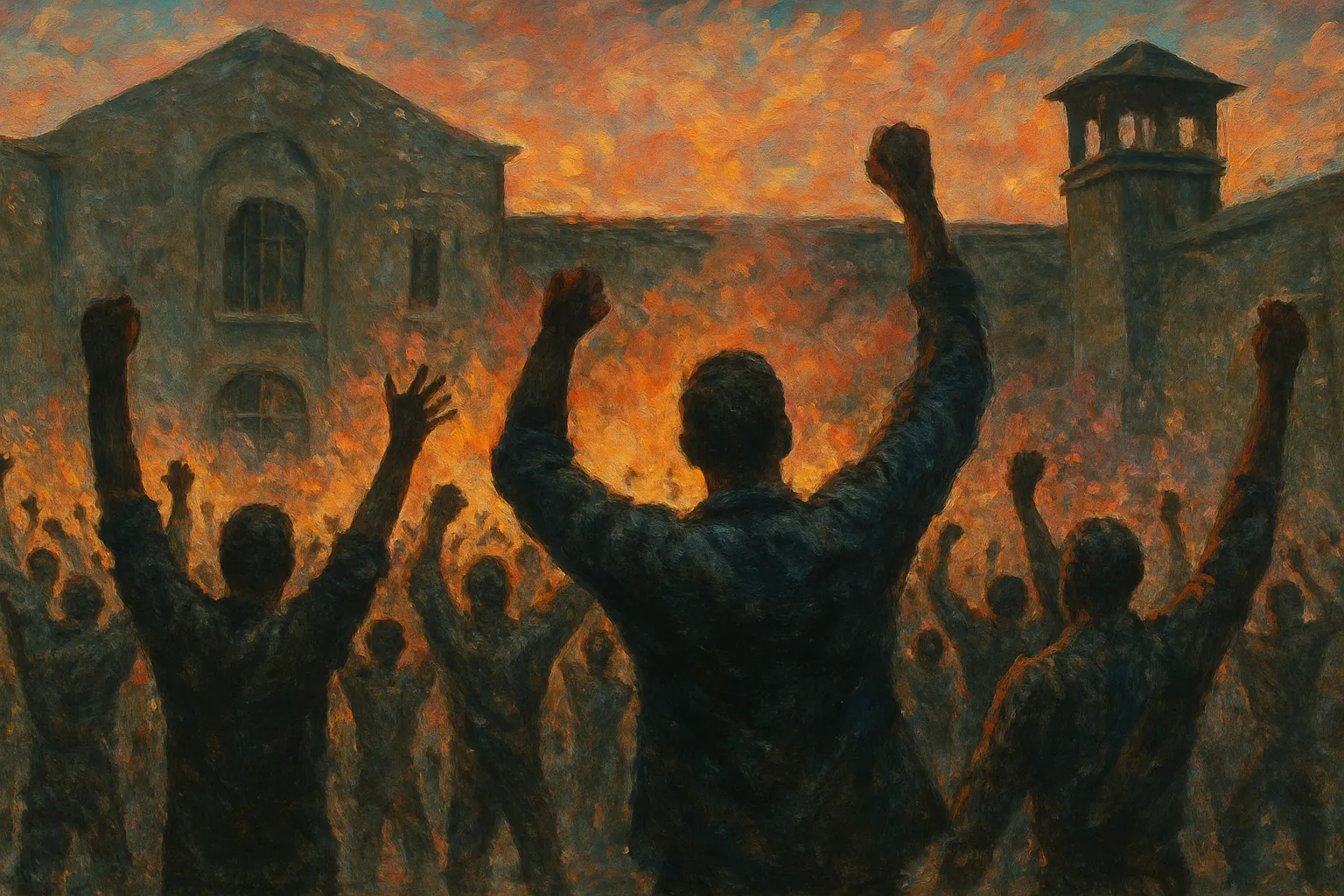
The Shawshank Redemption (1994), based on Stephen King's novella, stands as a monument to perseverance, widely celebrated as the ultimate cinematic ode to individual hope and resilience against institutional despair. The film follows Andy Dufresne’s two-decade-long journey of quiet defiance and eventual escape from the brutal confines of Shawshank Penitentiary, transforming the narrative of prison life into a timeless, seemingly universal allegory of personal redemption. However, this paper argues that the film's profound popularity and enduring message of resilience are rooted in a dangerous revisionist mythology that fundamentally obscures the systemic, racialized, and dehumanizing realities of the American carceral state. By presenting a racially sanitized and class-centric narrative, The Shawshank Redemption functions not as a radical critique of incarceration, but as an institutional isomorphism, normalizing the prison environment by minimizing its true endemic pathologies. Through a critical lens grounded in carceral studies, this analysis will deconstruct the film's idealized portrayal of racial integration, expose the function of cultural capital as white class privilege, and critique the dehumanization of queer subjectivity, ultimately proposing an abolitionist framework for Anti-Oppressive Social Work (AOP) practice.
Critical Analysis: Revisionist Mythology and Institutional Obfuscation
The Carceral State and Racial Mythology
The most significant ideological intervention of The Shawshank Redemption is its depiction of a racially integrated, harmonious prison population between 1947 and 1966. This portrayal serves as a fundamental myth, a phantasmagorical veil that obscures the history of racial segregation endemic to the United States carceral state.
Historically, U.S. state prisons, particularly during the mid-20th century, operated under explicit de jure segregation or were defined by de facto racialized gang structures and administrative placement strategies (Alexander, 2010). Studies in carceral geography have noted that racial cleavages remained the defining feature of inmate socialization well beyond the 1990s (Irwin, 2005).
The film’s aerial shot of the prison yard, where prisoners are depicted as a "scatter plot with no correlation" to race, is a potent example of historical revisionism. This mythical integration serves a crucial narrative function: it universalizes the prisoner experience, allowing the audience to focus on Andy's individual struggle against institutional corruption, rather than the structural oppression inherent in racialized mass incarceration. By omitting the stressors of racial tension and violence, the film creates a politically neutral backdrop that is devoid of the endemic systemic pathologies that characterize contemporary facilities, such as overcrowding, understaffing, and racially disparate sentencing (Clear, 2007).
Cultural Capital and White Class Privilege
The character of Andy Dufresne is the embodiment of white class privilege within the carceral setting. His cultural capital, derived from his background as a well-educated, upper-middle-class European American banker, is the primary source of his survival and eventual escape. Andy’s ability to use his knowledge of tax law to secure favors from guards and the Warden is not merely a clever plot device; it is an affirmation of how class-based skills translate into power and protection within a system designed to strip inmates of all resources.
This dynamic of agency and survival within a total institution is acutely illuminated by Žižek (2004), who suggests that genuine hope is not found in denial, but through an authentic, strategic engagement with the oppressive reality of one's confinement: "The only true solution is therefore fully to accept the rules of prison life and then, within the universe governed by these rules, to work on a way to beat them." Andy embodies this by utilizing his existing professional capital to strategically navigate the corrupt power structure.
The subsequent relationship between Andy and Red, which initiates upon a binary of "old and new," is framed by this class disparity. Andy's decision to teach other prisoners to read and pass the GED is depicted as an altruistic act of uplift. While ostensibly positive, this dynamic reinforces a stereotype: the illiterate young man (Tommy) is redeemed only by the intervention of the knowledgeable, privileged, white outsider. This narrative minimizes the socioeconomic and educational barriers created by systemic disinvestment in marginalized communities that lead to mass incarceration. The racialized and class-based nature of cultural capital acquisition is therefore co-opted and utilized to sanitize the prison hierarchy.
The Dehumanization of Queer Subjectivity
The film's representation of "The Sisters," the group that assaults Andy, presents a significant failure in ethical representation, directly contravening principles of Anti-Oppressive Practice (AOP). Red’s narrative framing describes them as being "inhuman," suggesting they are outside the realm of human-masculine experience.
This depiction achieves two problematic outcomes:
Dehumanization: It forecloses the possibility of self-determined queer identity within the prison, replacing it with a monstrous, inhuman-feminine archetype. This reinforces negative stereotypes of incarcerated gay, bisexual, and queer men as being fundamentally predatory.
Narrative Erasure: The film uses sexual violence as a plot device to reinforce Andy's victimhood, but simultaneously denies agency to the perpetrators. As social workers, we must recognize that incarcerated individuals who engage in such acts are complex subjects often navigating their own trauma and lack of control. By labeling them as "inhuman," the film avoids engaging with the complex realities of survival, trauma, and suppressed or distorted sexuality in a sexually violent environment.
Implications for Anti-Oppressive Social Work Practice in Carceral Settings
The dissonance between the utopian myth of Shawshank and the empirical reality of the carceral state is a critical lesson for the DSW practitioner. The ethical challenge is to maintain a sharp difference between these two realities, as the film’s popularity risks embedding a revisionist history that undermines systemic reform efforts.
The Ethical Imperative of Reality
As a white European American male engaging with a diverse prison population, my practice must be guided by a deep awareness of potential racial and cultural polarization. The film’s narrative, which champions universal solidarity forged in oppression, obscures the very real, often violent, racial coded mores and norms reinforced by both prisoners and administration.
Social workers must acknowledge that:
The lifetime likelihood of imprisonment for Black men born in 2001 is approximately 1 in 3, compared to 1 in 17 for white men (Mauer & King, 2017).
Prison administration practices, such as racially guided housing assignments, actively reinforce segregation, contributing to the very violence they claim to prevent (Clear, 2007).
My practice must prioritize the client’s right to self-determination while concurrently challenging the systemic constraints that deny them agency. This requires understanding that the client’s critical consciousness is forged not in a mythic multicultural space, but in a racially charged environment where their identity as a member of a marginalized group is inseparable from their experience of oppression.
Advocating for Abolitionist Utopias
The desire for a "utopian rethinking of the prison system" is fundamentally aligned with the principles of Abolitionist Social Work. Instead of seeking minor reforms within the carceral system, DSW practitioners should use the critique of films like Shawshank Redemption to advocate for alternatives to incarceration.
The "hope of prison racial integration" is insufficient; the goal should be to dismantle the structures that necessitate the prison apparatus in the first place (Davis, 2003). A genuine utopian response involves promoting restorative justice models, community-led accountability systems, and radical decarceration policies that reduce the state’s reliance on carceral management, thus making the film's fantasy of race-neutral solidarity unnecessary by eliminating the conditions of confinement itself.
References
Alexander, M. (2010). The new Jim Crow: Mass incarceration in the age of colorblindness. The New Press.
Clear, T. R. (2007). Imprisoning communities: How mass incarceration makes disadvantaged neighborhoods worse. Oxford University Press.
Davis, A. Y. (2003). Are prisons obsolete? Seven Stories Press.
Irwin, J. (2005). The felon. University of California Press.
Mauer, M., & King, R. S. (2017). Racial disparity in sentencing: A review of the research. The Sentencing Project.
Žižek, S. (2004, November). The Shawshank Redemption. The Believer, 2(9), 24–29.
Comments
Post a Comment