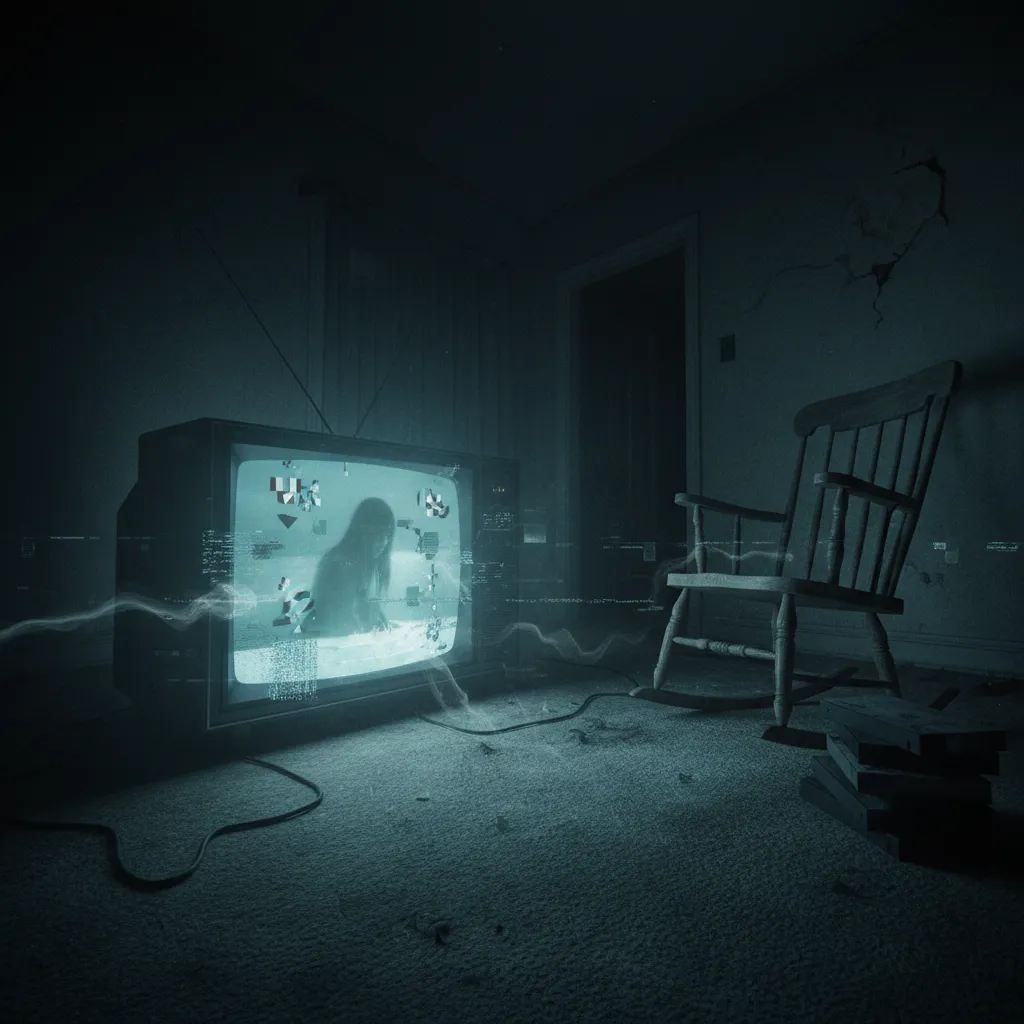
Before the word, before the self, before the very notion of a coherent reality, there pulses a primal, uncodified flow, a molecular chaos from which all experience erupts and into which all meaning threatens to dissolve. Where does knowledge begin, and how does it become rooted and a foundation for perceiving reality? We are born as a sack of cells wrapped in a stranger’s womb. Cells divide. Bones, sinew, and skin seem to appear from nowhere. On the outside, we become labeled as that "it," a parasite growing in the gut of a stranger, tossing off the host’s hormonal and dietary balance, destroying the ability to participate in society, and acting as a new cause for sympathy. One of the questions I remember asking in my Intro to Philosophy course regarding the rationalist vs. empiricist debate that plagued early philosophers was: "Ok, so as far as this punk is concerned, the stuff which makes up our dreams is rooted in our experiences, what do babies dream of?"
What do babies dream of? They are linguistic crying machines, devoid of complex thought and the functional equivalent of a Tamagotchi that leaves a larger mess. Let's saw into it. Evolutionary psychology has found that the first moments and years of an infant's life are shrouded in amnesia. Due to the painful and traumatic process of clawing out of a woman, it makes sense that the brain would protect the infant from memories related to the trauma. But, what if we could remember being born? How would we be able to understand the memories? The memories would be coded in a set of pre-articulate, painful emotions and blurry sensations. I imagine a baby's dream would be structured like this:
I. The Infant as Body-without-Organs: Pre-Oedipal Flows and the Crying-Machine
The initial moments of existence, as described by the primal emergence from the womb, are not merely biological events but a profound philosophical enigma. The infant, a "sack of cells wrapped in a stranger’s womb," is a nascent Body-without-Organs (BwO), a plane of consistency crisscrossed with axes and thresholds, latitudes and longitudes, traversed by gradients marking transitions and becomings (Deleuze & Guattari, 1983, p. 32). This "it," this "parasite growing in the gut of a stranger," is a pure desiring-machine, a "factory, a workshop" of raw production, indifferent to the molar organization of the host body or the societal narratives that will soon seek to contain it (Deleuze & Guattari, 1983, p. 2). The very act of being "tossing off of the host’s hormonal and dietary balance" and "destroying ability to participate in society" speaks to the BwO's inherent resistance to established codes and its capacity for deterritorialization, even before consciousness.
The question, "What do babies dream of?", pierces through the conventional Freudian lens, which often reduces the unconscious to a theater of representation, a stage for Oedipal dramas. For Deleuze and Guattari, the unconscious is not structural or personal; it is machinic, engineering, and productive (Deleuze & Guattari, 1983, pp. 62, 344). Thus, the infant's dreams are not rooted in "experiences" in the empirical sense, but in the raw, uncodified flows of desire. These "linguistic crying machines," devoid of complex thought, are in fact early desiring-machines, producing flows of sound and need that are "everything" in their intensity, oscillating from the zero degree of the BwO to the nth power of schizophrenic process (Deleuze & Guattari, 1983, p. 11). The "amnesia" shrouding the first years of life, often attributed to trauma, can be re-read as a primal repression exerted by the BwO, a protective mechanism against the premature imposition of psychic and social repression that would "crush desiring-production" (Deleuze & Guattari, 1983, p. 307). The "pre-articulate, painful emotions and blurry sensations" are not yet memories to be decoded, but rather "bands of intensity, potentials, thresholds, and gradients" on the BwO, pure life and lived experience that does not represent anything, but simply is (Deleuze & Guattari, 1983, pp. 32–33). This is the harrowing, emotionally overwhelming experience of the schizo, "as close as possible to matter, to a burning, living center of matter" (Deleuze & Guattari, 1983, pp. 32–33).
II. Samara's Viral Schiz-Flow: The Tape as a Deterritorializing Apparatus
Into this pre-Oedipal void, The Ring introduces Samara (Daveigh Chase), a figure of profound trauma whose very existence is a testament to the "breakdowns and breakthroughs" that characterize the schizophrenic process (Deleuze & Guattari, 1983, p. 11). Samara's inscription of her "last moments of her tragic life onto a VHS tape" is not merely a narrative act, but the creation of a deterritorializing apparatus, a viral schiz-flow designed to rupture the molar aggregates of consensual reality. The tape functions as a desiring-machine, its "output" being the "blurring of the viewer’s reality as they transgress reality into Samara’s last moments of life" (Deleuze & Guattari, 1983, p. 292). This is not a symbolic representation of trauma, but a direct, machinic transmission of raw intensity, a "nonfigurative index" where "persons give way to decoded flows of desire, to lines of vibration" (Deleuze & Guattari, 1983, p. 330).
Rachel (Naomi Watts), the "absent-minded single mother," becomes entangled in this molecular contagion. Her initial "half believes the reality of the tape" quickly escalates as "images from the tape start materializing their way into her reality." This is a forced deterritorialization, a violent "undoing of the Oedipal trap of repression" that psychoanalysis typically reinforces (Deleuze & Guattari, 1983, p. 307). Rachel's world, once stratified by the familiar codes of motherhood and investigation, begins to dissolve, revealing the inherent "ontological insecurity" that R.D. Laing (1960) describes as the 'absence of a coherent self,' a "clearly defined personality" constructed from "personological co-ordinates," is confronted with the "vibrations, flows, schizzes, and 'knots'" of Samara's deterritorialized being (Deleuze & Guattari, 1983, pp. 326–327). The tape, in its very refusal to be contained by rational explanation, embodies the "deterritorialized flows of desire, the flows that have not been reduced to the Oedipal codes and the neuroticized territorialities" (Deleuze & Guattari, 1983, p. 11). It is a "line of escape leading elsewhere," a direct challenge to the "iron collar of Oedipus" that seeks to contain and repress the force of desiring-production (Deleuze & Guattari, 1983, pp. 11, 62).
III. Parental Reterritorialization: The Oedipal Script and the Birth of Neurosis
The film's central question, "Is this not the same intrusion on an infant's reality that parents play?", is a profound schizoanalytic insight into the mechanisms of social repression. The infant, a "linguistic crying machine" acting "with a radical indifference," produces raw flows of desire that are immediately subjected to parental reterritorialization. The parent "seeking to create meaning out of the seemly irregular whims of the baby," "checks the diaper and seeks to diagnose the need," thereby imposing a "parental narrative" and "conforming intangibles into a script." This is the very essence of Oedipalization: the reduction of the "connective tissue" of pure intensities to the "endless, dreary discovery of Oedipus: 'So it's my father, my mother'" (Deleuze & Guattari, 1983, p. 33).
This parental "script" is a form of "banking education," as described by Paulo Freire (2000), where knowledge is deposited into the passive recipient, rather than co-created through critical dialogue. The infant's "radical indifference" is a nascent resistance to this imposition, a refusal to be "grounded in reason" or to have its "experience limited to the moments where crying is related to feeding." This is the beginning of the "neuroticization" that precedes neurosis, where the "process is arrested, the limit of desiring-production is displaced, travestied, and now passes over into the Oedipal subaggregate" (Deleuze & Guattari, 1983, p. 327). The "bonding between a parent and child," while "biochemical," becomes "empirical and rational insofar as a parent conforms intangibles into a script," thereby constructing the "character armor" (Reich, 1949) that will define the child's social identity. This "muscular armor" is a bodily blockage of emotional flow, a rigid defense against the raw, uncodified molecular chaos, which Reich (1949) observed as a hardening against the painful imposition of social requirements. The child, in conforming to the parent's desire to form a "childlike thing," finds a temporary footing in the symbolic order, but only at the cost of its spontaneous, schizoid flow. Out of this negotiation, the child becomes its subjectivity via a compulsion to become, forcing its way into a shared symbolic space.
References
Badiou, A. (2005). Being and event (O. Feltham, Trans.). Continuum.
Deleuze, G., & Guattari, F. (1983). Anti-Oedipus: Capitalism and schizophrenia (R. Hurley, M. Seem, & H. R. Lane, Trans.). University of Minnesota Press.
Freire, P. (2000). Pedagogy of the oppressed (M. B. Ramos, Trans.). Continuum.
Freud, S. (1961). The ego and the id (J. Strachey, Ed. & Trans.). W. W. Norton.
Laing, R. D. (1960). The divided self: A study of sanity and madness. Penguin Books.
Nietzsche, F. (1996). Human, all too human: A book for free spirits (R. J. Hollingdale, Trans.). Cambridge University Press.
Reich, W. (1949). Character analysis (T. P. Wolfe, Trans.). Orgone Institute Press.
Žižek, S. (2009). The parallax view. MIT Press.
Comments
Post a Comment