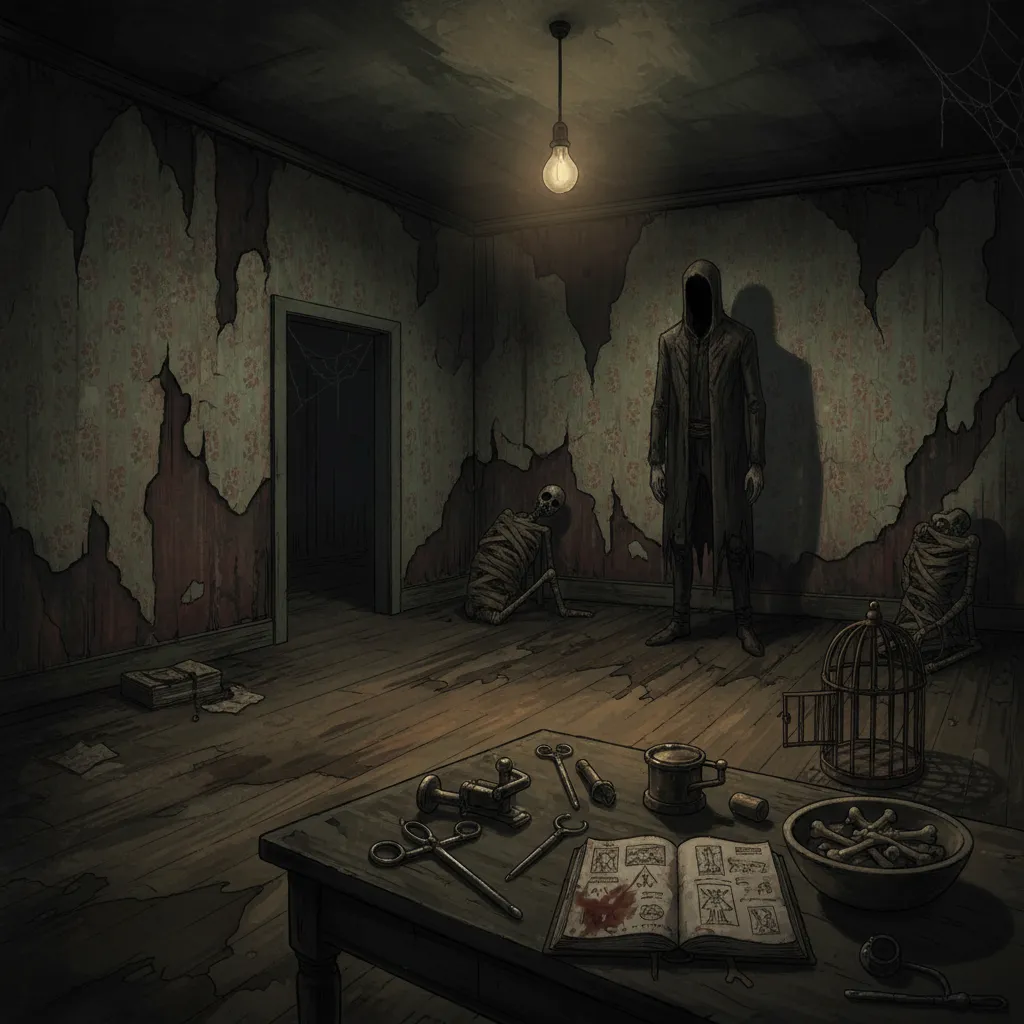
In Grimm Love, the moment the world becomes twitter-painted—a vibrant shroud cast over the tree, the park bench, the municipal transit—is the very moment the schizoanalyst suspects treason. This immediate, saturated surge of meaning is not transcendence; it is the most cunning act of reterritorialization the socius can perform. Love is the machine that takes the chaotic, unbounded production of the Body-without-Organs (BwO)—the vast, unorganized field of intensity—and brutally redirects its infinite flows onto the cramped, molar territory of the couple and the family (Deleuze & Guattari, 1983). The park bench is dislodged from its context as wood and municipal property, only to be re-inscribed as a marker on the single, thin line of our shared narrative. The absurdity of staking a claim on a singular entity (Why this one and not others?) is dissolved by this powerful, paranoiac coding which substitutes destiny for arbitrary choice.
The traditional lovers, in their conventional orbit, are merely the molar display unit, strolling through the manicured surfaces of the socius—the mall, the public park. Their visible bond is an advertisement for stratification. The onlookers, seized by envious compulsion, long not for authentic connection, but for the social coding itself, the smooth, predictable line that promises to resolve their own Laingian ontological insecurity (Laing, 1969) into a functional, validated image. That immediate longing, so quickly curdled into shame and self-pity, is the price paid for failing to conform to the Character Armor (Reich, 1949) society demands. They are not envious of the connection; they are envious of the role. This is love as pure State repression, a machine that consumes the world's multiplicity only to excrete a binary justification for the existing social order.
The Deterritorializing Cut: Flesh, Flow, and Muscular Armor
But what if the bond is not for the preservation of the binary but its obliteration? Simon and Oliver, walking through the sterile lights of the Kmart, searching for a bone saw and a George Foreman Grill, are constructing a new desiring-machine. Their connection is defined by the absolute refusal of the self as a sovereign, intact economic unit. The question shifts from Why this one? to How does this flow happen?
The ear, the very perimeter of the Oedipalized sensorium—the organ of listening, obedience, and social contract—is violently ripped. A cut is executed, the decisive rupture in the body's territorial integrity. This is the immediate Connective Synthesis (Deleuze & Guattari, 1983) that bypasses all meaning, rerouting the mouth's flow—speech, interpretation, the neurotic kiss—into the brutal, savoring line of consumption. Oliver is engorged in his mid-day snack, contemplating sauces for people toes; this is not perversion but the purest form of libidinal engineering.
Simon’s resulting scream in joy is the sound of his muscular armor shattering. His hollow sense of self is the political inscription of his body, a structure hardened by rigid defense mechanisms (Reich, 1949) designed to block the raw flow of desire. His wish to be consumed is the ultimate line of flight from the social body, the violent act that transforms the individualized, neurotic body into decoded flow—raw matter ready for total material synthesis. The scream is the release of repressed somatic energy, an ecstatic affirmation that the body is finally dissolving its boundaries and joining the Full BwO through consumption.
Their vow, "in dead do we conjoin," is ruthlessly literal. It is not an abstract fidelity but a nihilistic, instantaneous commitment to finality. This short-term, total love is more transcendent than the zillions of couples who put only the least of their lives at stake, whose love is a financialized investment in social continuity. Simon and Oliver stake the totality of existence, accelerating the capitalist logic of deterritorialization to its molecular extreme: the body-as-capital itself becomes a fungible resource. They create a primal sense of eternity forged in the flow of becoming-flesh, a horrifying affirmation of the Nietzschean will unto the abyss (Nietzsche, 1968).
Katie Armstrong: The Cancerous BwO and the Capture of Intensity
The entry of Katie Armstrong, the morbidly obsessed college student, confirms the persistence of the Paranoiac Pole. She does not seek to participate in the machine; she seeks to study, categorize, and idolize it, trapping the molecular intensity within the molar structure of a thesis. Her transfer to Germany is the academic gesture of reterritorialization, her thesis a machine built to neutralize the radical charge of the Line of Flight.
Katie’s work is the epitome of the Cancerous BwO (Deleuze & Guattari, 1987). It is aggressively interpretive, consuming the radical event only to transform it into academic capital—a safe, manageable piece of knowledge. Her investigation seeks to trap the pure flow of blood and ecstasy within the static code of psychological jargon, establishing the Disjunctive Synthesis at the level of the social academy.
Her role is that of the structural oppressor. As Freire (1970) observed, the dominant structure cannot tolerate the critical consciousness achieved by the self-annihilating subject; it must subject the revolutionary event to the banking concept of education. Katie deposits her interpretation, turning a volatile, living Event into a dead, codified object of study. She is the psychological version of the State, insisting that all forms of desire, even the most totalizing, must be filtered through the pre-approved, Oedipalized lens of pathology (Freud, 1961), thereby maintaining the tyranny of the normative social code.
Her final idolatry—laying everything on the altar of her fetish—is the ultimate closure. She falls in love not with the men, but with the coding mechanism she attempts to impose upon them. She desires the cliché of the revolutionary act (Žižek, The Pervert's Guide to Ideology), not its raw materiality, affirming the Badiouian concept of love as an Event, but immediately transforming it into a project of conservative preservation of the analytic framework (Badiou, 2009), rather than a project of creation ex nihilo.
The Absolute Flux
The schizophrenic, walking the plane of consistency, sees the Kmart as a temporary, brittle stratification and the digestive tract as the site of pure transformation. Grimm Love is a diagnostic tool for mapping the limits of the desiring-machine. It confirms that when the primary social machine (Love/Oedipus) becomes too repressive, the flows of desire do not politely divert; they accelerate into absolute intensity.
The terrifying truth is that Simon and Oliver’s act is a fulfillment of the system’s own ultimate desire: total liquidity. They turn the body into a decoded flow of resource, challenging the very notion of the individualized, protected subject that underpins both economic labor and social security. They demonstrate that the only way to genuinely escape the Paranoiac Pole's coding is through the nihilistic, molecular embrace of the Empty BwO, where the self is finally and wholly consumed, leaving behind only the pure, brief, un-codable trace of the absolute flux.
References
Badiou, A. (2009). In praise of love. Serpent's Tail.
Deleuze, G., & Guattari, F. (1983). Anti-Oedipus: Capitalism and schizophrenia (R. Hurley, M. Seem, & H. R. Lane, Trans.). University of Minnesota Press.
Freire, P. (1970). Pedagogy of the oppressed. Seabury Press.
Freud, S. (1961). The Standard Edition of the Complete Psychological Works of Sigmund Freud, Volume XIX (1923-1925): The Ego and the Id and Other Works. Hogarth Press.
Laing, R. D. (1969). The divided self: An existential study in sanity and madness. Pantheon Books.
Nietzsche, F. (1968). The Will to Power (W. Kaufmann, Ed., & W. Kaufmann & R. J. Hollingdale, Trans.). Vintage Books.
Reich, W. (1949). Character analysis (T. P. Wolfe, Trans.). Orgone Institute Press.
Žižek, S. (Speaker). (n.d.). The Pervert's Guide to Ideology FilmFilm. Zeitgeist Films.
Comments
Post a Comment