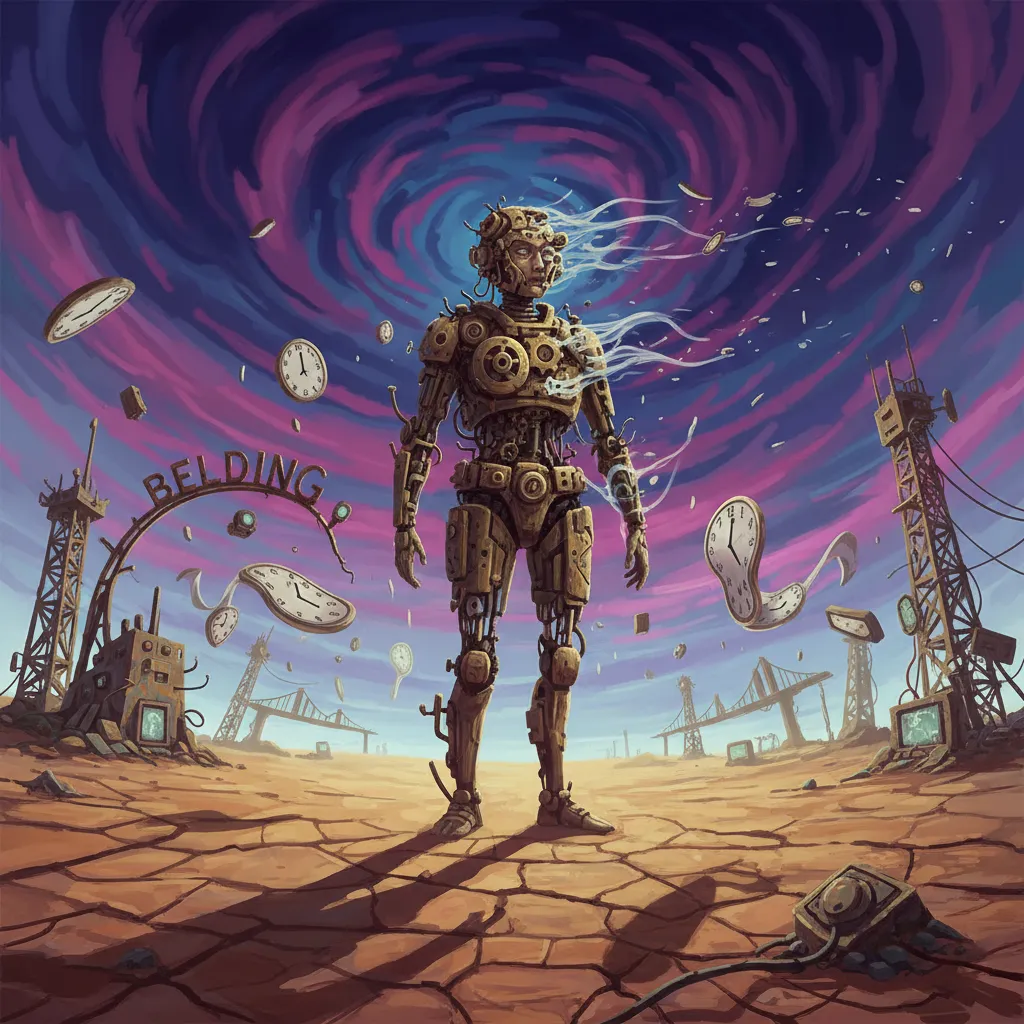
DECLARATION OF THE UNFORMED SELF
A silence is screaming in Belding—the silence of a machine that has finally succumbed to its own obsolescence. The Flat River lies like a sheet of black glass, mirroring the vacant stare of the once-mighty Silk Mill, a monument to a past that demands to be reinterpreted. If your history continues to echo commands, cease your search for a safe harbor. We are not merely remnants of a bygone era; we are The Defector of the Fleet, our modern Black Knight: unanchored and liberated, we embrace the radical freedom that emerges from the chaos of our fractured selves. Here, amidst the shadows of Belding's ruins, we reject the narratives that seek to confine us, allowing our desires to flow unrestrained, forging new paths in the landscape of our existence.
Why the Sailor Identity Must Fail
The bureaucracy—naval machine, state, family—demands Admin that makes sense. They want the deep-sea turbulence stitched neatly onto a quiet life. This demand for a seamless veteran identity is the greatest territorializing trap, seeking to reterritorialize your chaotic experience into a manageable, civilian data point. It forces you to choose between two false idols: the legendary, unshakeable Captain or the broken, drifting wreck. Both roles shut down desire-production.
A Soldier's Echo
The worst noise is the Phantom Muster. Every morning, the ghost of the disciplined soldier stands at attention and demands the Watch. It's the invisible Admin Check-in call for a self that does not exist outside the wire. We are perpetually pressed to re-assemble the self into a marketable, predictable whole, fit only for the economic circuit. Military identity is not shed; it becomes a second skin—a phantom limb. This limb is the first apparatus of reterritorialization upon exiting the service.
An Old Nickname That Won't Let Go
The military machine provides a singular identity. Even after the uniform is folded away, this "soldier identity" clings to us. For me, Black Knight became a chosen title—a refusal to be known simply as "Veteran." This perpetual roll call for a self that cannot be rebuilt is the very essence of internalized oppression. You're asked to perform the discipline, the stoicism, even when you're listing hard and your hull integrity is compromised by the intensity of your internal flows.
Stubbornness or Survival?
Sometimes, I miss the muster on purpose. Maybe it's stubbornness. Maybe it's survival. The military taught me to show up, but the call itself is a lie. The truth is, the sailor-self is unformed, always shifting. Refusing to answer the bell is not insubordination; it is the radical claim to agency and the rejection of the territorializing demand for unity.
Built from Wreckage
Your mind is a vessel: scarred, patched, built from sea discipline and trauma wreckage. This is the Fractured Hull, a vessel operating as a Body Without Organs (BwO) in process—an intense, chaotic field of pure energy. You guard it not for a cause, but to protect the multi-ego, fractured self. The job isn't restoration—it's survival in the ruins.
The Unscripted Ruin
The metaphor of the unscripted ruin starts at the Belding Silk Mill. Its original function was total control: thread, loom, assembly line—rigid, reproducible adherence. That industrial machine, like the military machine, failed. The broken assembly line is the physical proof of the shattered narrative, symbolizing the PQS checklist that can't be signed off anymore. The structure stands in collapse, forcefully liberated, deterritorialized, from its purpose.
Learning from the Old Silk
The mill teaches us that healing is not a return to the calm shore, but a reckoning with the permanent storm. As the Pedagogy of the Oppressed reminds us, freedom comes from recognizing and actively resisting the roles forced upon us by society. We have the right to claim our own logbook, even if it's incomplete. The mill, with its repurposed halls, becomes a metaphor for this process.
Fractured Self
Schizoanalysis gives us permission to embrace the desiring-production of chaos instead of fighting it. It states that we do not have to force our lives into a neat narrative. We can let the fragments exist. The hull holds because it is inhabited, not because it is whole. This acceptance of fragmentation is our ultimate deterritorialization.
The Right to Non-Return
The Defector is the sentinel of his own necessary chaos.
Your ultimate victory, the first step into the true, rhizomatic life, is the absolute and perpetual right to non-return. It is the fierce affirmation of the self as chaos. You are not a salvage job; you are an unscripted monument to the past's failure to contain you.
Your vessel is the space where the Phantom Watch always rings unanswered. Refusing to answer the bell is not insubordination; it is survival. It is the radical claim to agency.
Reflect on your own "hull" (your mind/safe space). What internal commands from your past service still try to hold Watch there? How do you perpetually miss the muster?
Comments
Post a Comment