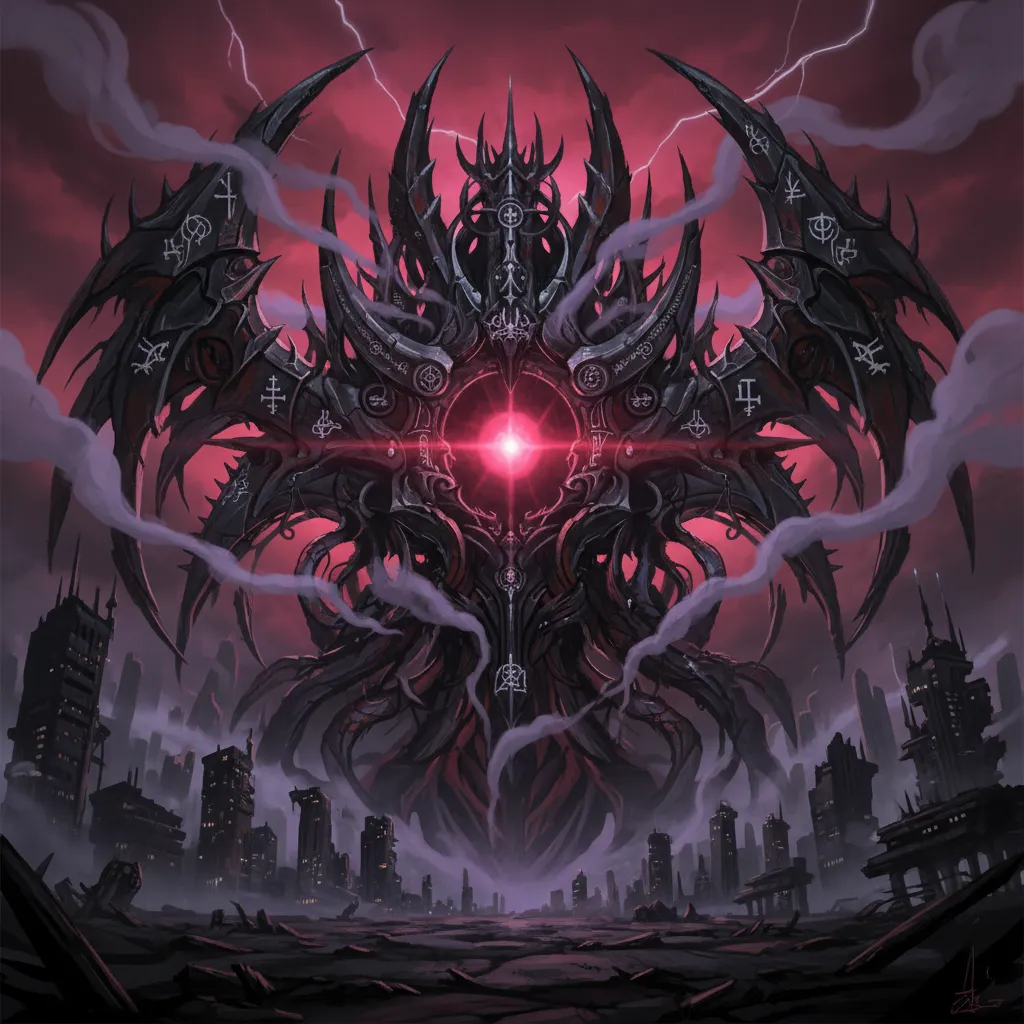
Some days, watching Antichrist feels like being dropped, blindfolded, onto the set as chaos erupts from every corner—and not just on the screen. I remember seeing it for the first time at a nearly empty midnight screening, with the only other viewer sobbing quietly two rows ahead. That human rawness is exactly what schizoanalysis wants to unleash: not coherence, but trembling, generative disarray. So, if you’re expecting tidy Freudian answers, buckle up. We’re going off the rails.
Antichrist, Desire-Machines, and Unmaking the Family
Every time I revisit Antichrist (2009), I imagine what would have happened if I’d tried to write a college paper on it—my thesis would have combusted five times before the credits rolled. This is not a film that lets you stabilize meaning, especially not with the old psychoanalytic tools. Instead, Lars von Trier’s infamous opening sequence—a slow-motion ballet of sex, death, and grief—shatters the myth of the nuclear family and exposes the fantasy of control as just that: a fantasy. Here, schizoanalysis, as developed by Deleuze and Guattari, does not patch up the ego or repair the family; it laughs at Oedipus and asks, “What new circuit is forming from this trauma?”
The Family as Failed Machine
The prologue of Antichrist is not just shocking; it is a machinic break, a “cut” that slices through the social stabilization promised by the family. The child’s death is not simply a Freudian wound to be sutured by mourning rituals or parental guilt. Instead, schizoanalysis sees this event as a rupture in the Oedipal theater—a point where the family ceases to function as a closed system and becomes a site of uncontrollable flows. The myth of the nuclear family, so central to psychoanalysis, is exposed as a fragile apparatus, always on the verge of breakdown.
Deleuze and Guattari’s concept of Desiring Machines is crucial here. These are not literal machines, but abstract entities that connect and disconnect impersonal flows—grief, guilt, sex, violence—beyond the ego and Oedipus. The family is not a stable container for desire; it is a temporary relay in a much larger network of machinic connections. As Deleuze famously wrote:
Desire is not a lack, but a machine that produces connections. – Gilles Deleuze
Desire-Machines Churn Through Grief, Guilt, and Sex
Traditional psychoanalysis, following Freud, would read the film’s trauma as a wound in the ego, a drama to be resolved by working through guilt and restoring the family’s symbolic order. But schizoanalysis refuses this closure. In Antichrist, grief does not heal; it mutates. The couple’s attempts to process loss—through sex, therapy, violence—do not return them to normality. Instead, each act becomes a new machinic relay, a fresh connection or disconnection in the network of desire. The Desiring-Machine does not grieve; it mutates.
Sex in the prologue is not a return to intimacy, but a machinic process that runs parallel to death—two flows crossing, never reconciling.
Guilt is not a personal failing, but a signal that the old circuits have shorted out, and new ones are forming in unpredictable directions.
Grief is not a lack to be filled, but a proliferation—a surplus of affect that cannot be contained by the family or the ego.
No Closure, Only Circuits
Deleuze and Guattari argue that schizoanalysis must destroy the traditional psychoanalytic structures—Oedipus, the ego, the family—so that desire can flow freely. In Antichrist, every attempt to restore order only produces new breakdowns. The couple’s journey into the woods is not a return to nature or healing, but a further deterritorialization—a movement away from the codified, the familiar, and the safe. The forest is not a symbol of the unconscious to be interpreted; it is a machinic space where new connections form and old ones dissolve.
The film’s refusal of closure is not a failure, but a schizoanalytic triumph. Each traumatic event is not a broken ego to be patched by the family, but a new relay in the circuit of desire. The question is never, “How do we heal?” but always, “What new machine is being assembled here?”
Invented Anecdote: Thesis Combustion and the Limits of Interpretation
If I’d had to write a college paper on Antichrist, I would have started with Freud and ended in flames. The film does not allow for the comfort of Oedipal interpretation or the fantasy of family restoration. Instead, it demands that we follow the flows—through grief, guilt, and sex—wherever they lead, even if that means unmaking the family and laughing at Oedipus along the way.
Desiring Machines
Schizoanalysis
Deleuze Guattari
Psychoanalysis
Deterritorialization
Family Myth
Meta description: Schizoanalysis unravels Antichrist (2009), exposing how desire-machines disrupt the family myth and bypass psychoanalytic closure.
Comments
Post a Comment